

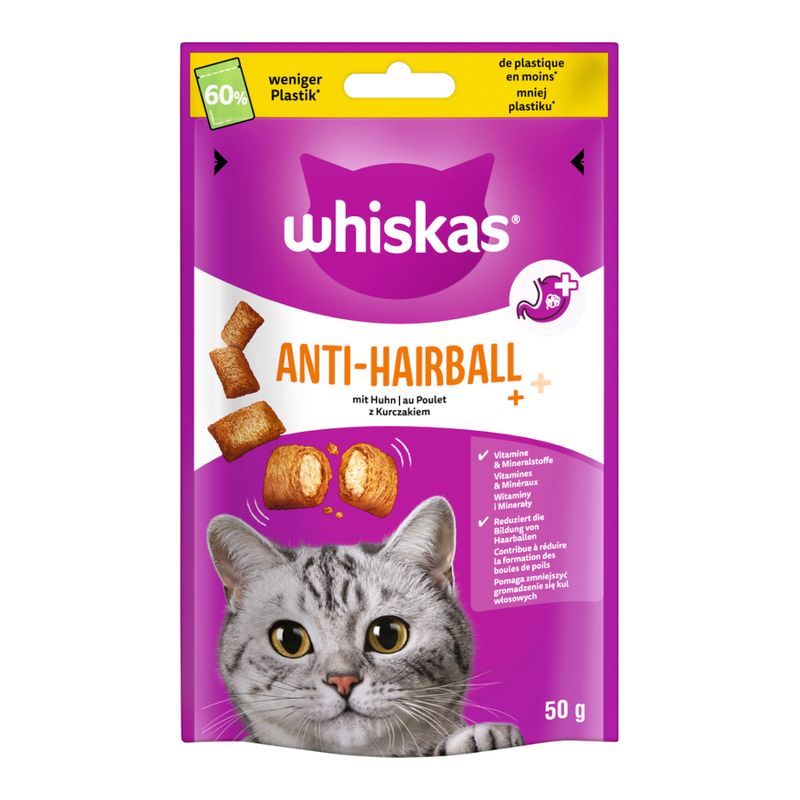
This Whiskas treat is a crunchy cat snack with a crunchy shell and a juicy core, offered as a meaty supplement to a complete diet. According to the product information, it reduces hairball formation and uses natural dietary fibres to help move swallowed hairs through the digestive tract.
These treats are a supplementary food; feed up to 12 treats per day and use within four weeks of opening. The product lists analytical constituents and feeding guidance, including protein 22.0%, fat 22.0%, fibre 2.0% and an energy of 4110 kcal/kg. Store in a cool, dry place, ensure fresh water is available, and note images are illustrative only.
At a Glance
Whiskas Anti-Hairball is presented as a crunchy cat snack with a crunchy shell and a juicy core, offered as a meaty supplement to a complete diet. The product information highlights natural dietary fibres intended to help move swallowed hairs through the digestive tract and reduce the risk of hairball formation.
| Treat Type | Crunchy snack |
|---|---|
| Format & Texture | Crunchy shell, juicy core |
| Main Protein | Meat and animal by-products (including chicken 4%) |
| Package Sizes |
|
| Calories & Energy | 4110.0 kcal/kg |
| Max Daily Amount | Up to 12 treats per day |
| Use | Supplementary food for cats, snack between meals or as a tasty treat |
| Made In | Not stated |
Ingredients & Feeding Notes
This section covers the treats’ ingredient composition and how the product is intended to be used according to the label and product page. It pulls together explicit ingredient listings and the manufacturer’s stated guidance for feeding and storage.
| Main protein sources |
|
|---|---|
| Carbohydrate & fiber sources |
|
| Fats & oils |
|
| Added vitamins, minerals, or supplements |
|
Feeding guidance on the label indicates these are a supplementary food intended as a snack between meals. The manufacturer states a maximum of up to 12 treats per day and advises using the product within four weeks of opening. Storage and usage notes on the label include keeping the product in a cool, dry place and ensuring fresh water is always available. Packaging warnings and practical handling instructions are provided on the label; follow those directions directly. The label provides basic analytical constituents (for example protein, fat, fibre and an energy figure) which aid portion awareness, but it does not list calories per individual treat or per 100 g. This means while overall nutrient percentages and an energy value are given, precise per-treat calorie information is not available from the label, which limits fine-grained portion calculation.
Users Commonly Mention
This section summarises recurring themes from available user feedback, based only on the provided comments. It highlights common observations reported by reviewers without attributing individual statements.
- Frequent praise for palatability: Users frequently mention that cats enjoy these treats and accept them readily.
- Reports of reduced hairball incidents: Several users report fewer hairball episodes or reduced regurgitation when giving these treats, sometimes alongside other products.
- Occasional concerns about consistency or recipe changes: Some reviewers indicate their cats stopped liking the treats and suspect a changed recipe or a bad batch.
- High appeal in multi-cat homes: Multiple accounts describe strong demand from several cats, including attempts to access stored treats.
- A few users note these treats are tolerated by cats with sensitive stomachs.
Good & Bad
A concise summary of notable strengths and weaknesses based on the product label and available user feedback.
- Clear feeding guidance is provided on the label, including a stated maximum of up to 12 treats per day and a recommendation to use within four weeks of opening.
- The ingredient listing identifies key components such as grains, vegetable by-products, oils and fats, meat and animal by-products (including chicken 4%), and vegetable protein extracts, plus natural dietary fibres.
- Analytical constituents and an energy figure are declared (protein 22.0%, fat 22.0%, fibre 2.0%, ash 8.0%, energy 4110.0 kcal/kg), which supports general portion awareness.
- User feedback commonly mentions good palatability, indicating these treats are appealing to many cats.
- The label gives energy per kg but does not state calories per individual treat, limiting precise per-treat portioning.
- The main protein is listed as “meat and animal by-products,” which is less specific than naming a single primary meat source.
- Some users report changes in acceptance over time, suggesting occasional variability in consistency or recipe perception.