
Bathing your dog sounds simple — until you realize some owners do it every week while others go months without a single wash. Both can cause problems depending on the dog’s coat, skin condition, and daily routine. Getting the frequency right protects your dog’s health and overall comfort long term.
There is no universal answer that works for every breed, but there are clear guidelines based on coat type, lifestyle, and health. Understanding these factors will help you build a routine that actually fits your dog — not just a generic schedule pulled from the internet.
Most dogs do well with a bath every 4 to 6 weeks — but your dog’s coat, skin, and daily routine may change that significantly.
It Depends on the Breed
Coat type is the single biggest factor in how often your dog needs a bath. Bathing too often strips the natural oils that protect the skin, while bathing too rarely leads to buildup, odor, and matting. The right frequency depends on what kind of coat your dog has.
| Coat Type | Recommended Frequency |
|---|---|
| Short coat (Beagle, Boxer) | Every 6–8 weeks |
| Long coat (Shih Tzu, Maltese) | Every 3–4 weeks |
| Double coat (Husky, Golden Retriever) | Every 6–8 weeks |
| Curly or wavy coat (Poodle, Labradoodle) | Every 3–4 weeks |
| Hairless (Chinese Crested, Xoloitzcuintli) | Every 1–2 weeks |
| Wire coat (Terriers, Schnauzers) | Every 6–8 weeks |
Other Factors That Affect How Often
Even two dogs of the same breed can have very different bathing needs depending on how they live. A dog that stays mostly indoors will stay fresher far longer than one that swims, runs through mud, or has known skin sensitivities that require more regular washing.
- Activity level
Dogs that spend a lot of time outdoors, swim, or roll in mud will need more frequent baths regardless of coat type. - Allergies
Dogs with environmental allergies may benefit from more frequent bathing to remove pollen and irritants from the coat. - Skin conditions
Some conditions require medicated shampoo on a vet-prescribed schedule. Always follow your vet’s guidance. - Indoor vs outdoor lifestyle
Mostly indoor dogs that don’t get dirty stay cleaner longer and need less frequent bathing. - Odor
Some breeds naturally produce more oil and smell faster than others. This may require adjusting your schedule. - Season
Dogs may need more baths in summer due to heat, sweat, and outdoor exposure.
How to Know When It’s Time for a Bath
Rather than following a rigid calendar, learn to read your dog’s signals. The coat, smell, and behavior will usually give you clear signs that a bath is overdue — and sometimes those signs appear earlier or later than expected depending on the week and season.
- Noticeable odor
A strong or musty smell that doesn’t go away after brushing. - Dull or greasy coat
The fur looks flat, oily, or loses its natural shine. - Visible dirt
Mud, debris, or staining that brushing alone won’t remove. - Increased scratching
Itchiness caused by dirt, allergens, or dry skin buildup. - Sticky or matted fur
Especially in long-coated breeds after outdoor activity.
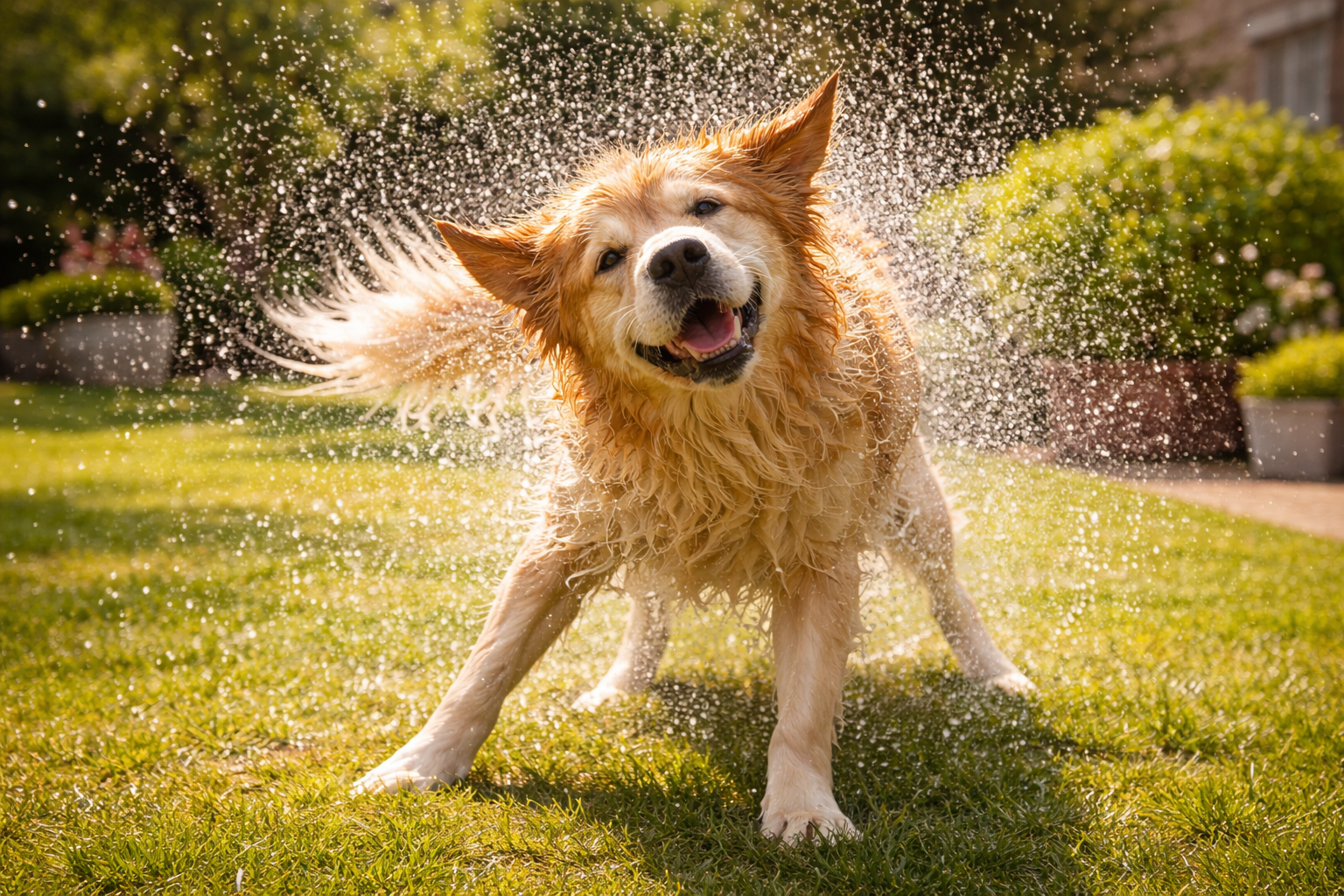
“I told you I didn’t need a bath.”
How to Bathe Your Dog at Home
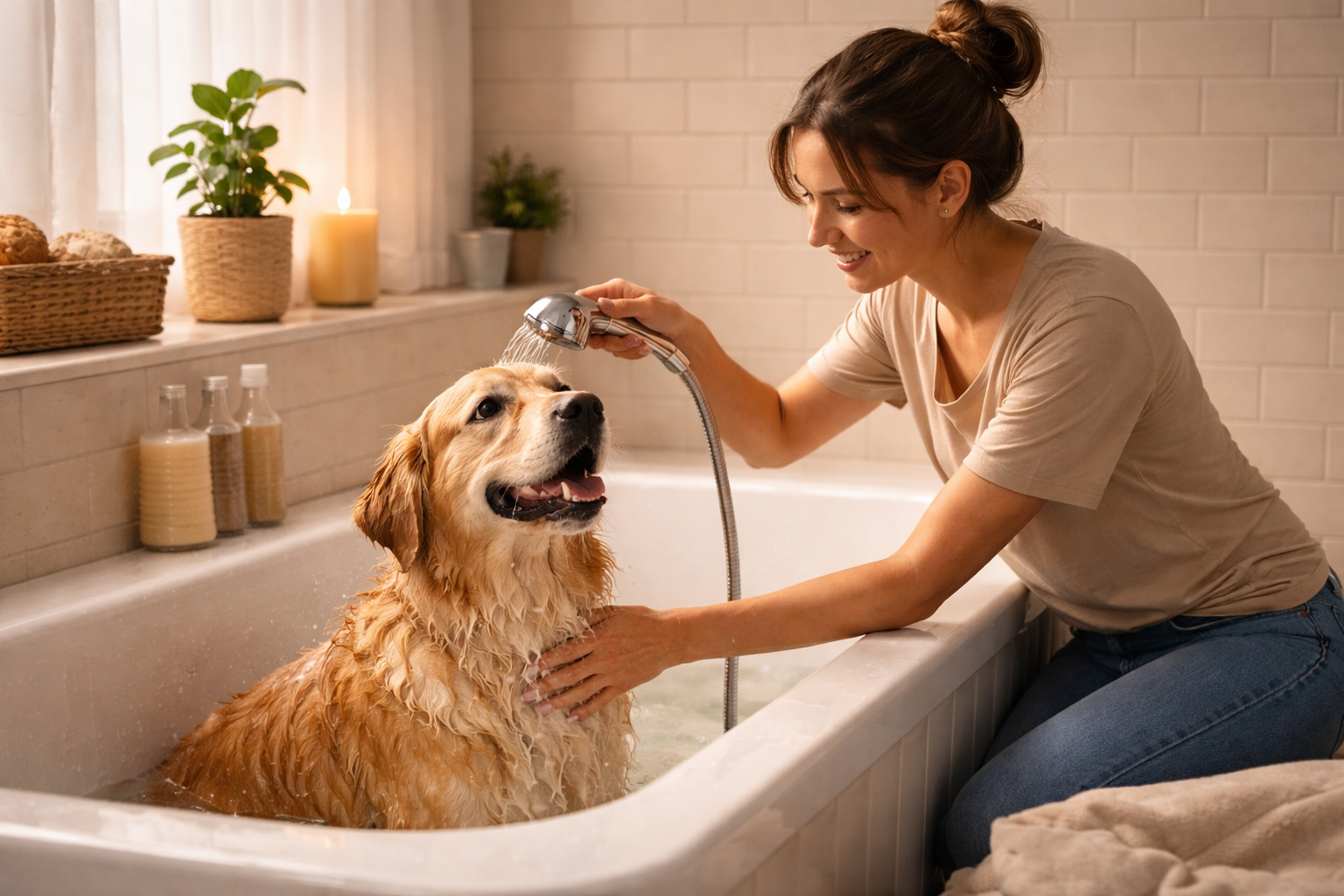
A consistent bath routine makes the experience calmer and more efficient for both you and your dog. The more regularly you do it, the more comfortable they become — especially if you start the habit early and keep each session positive and low-stress.
- Brush first
Remove tangles and loose fur before getting the coat wet. Wet mats are much harder to remove. - Use lukewarm water
Too hot or too cold can stress your dog. Test the temperature on your wrist first. - Wet the coat thoroughly
Work from the neck down, avoiding the face and ears initially. - Apply dog shampoo
Use a shampoo formulated for dogs. Never use human shampoo — the pH is different and can irritate the skin. - Massage and lather
Work the shampoo into the coat gently, paying attention to paws, belly, and tail. - Clean the face carefully
Use a damp cloth or dog-specific facial wipes instead of running water near the eyes and ears. - Rinse completely
Leftover shampoo residue is one of the most common causes of skin irritation. Rinse longer than you think is necessary. - Dry thoroughly
Towel dry first, then use a dog-safe blow dryer on low heat. Make sure the coat is fully dry, especially in double-coated breeds.
Common Mistakes to Avoid
Even experienced owners make bathing mistakes that affect their dog’s coat and skin over time. Most issues come down to frequency, product choice, or technique — and all of them are easy to fix once you know what to watch for.
- Bathe on a schedule
Stick to the recommended frequency for your dog’s coat type and only add extra baths when genuinely needed. - Bathing too often
Strips natural oils, leading to dry, irritated skin and a dull coat that loses its healthy texture. - Use dog-specific shampoo
Always choose a shampoo formulated for dogs — many brands offer options for sensitive skin or specific coat types. - Using human shampoo
Human products have a different pH and can damage your dog’s skin barrier, causing dryness or irritation. - Rinse thoroughly
Keep rinsing until the water runs completely clear to prevent post-bath itching and skin issues. - Not rinsing enough
Shampoo residue left on the skin is a very common cause of itching after a bath. - Brush before bathing
Always work through tangles before getting the coat wet — it makes the whole process easier. - Skipping the pre-bath brush
Wet fur causes mats to tighten and bind, making them extremely difficult to remove without cutting. - Dry fully after bathing
Use a towel and low-heat dryer to ensure the coat is completely dry, especially for thick breeds. - Not drying properly
A damp coat traps moisture against the skin, leading to infections, hot spots, and persistent odor.