
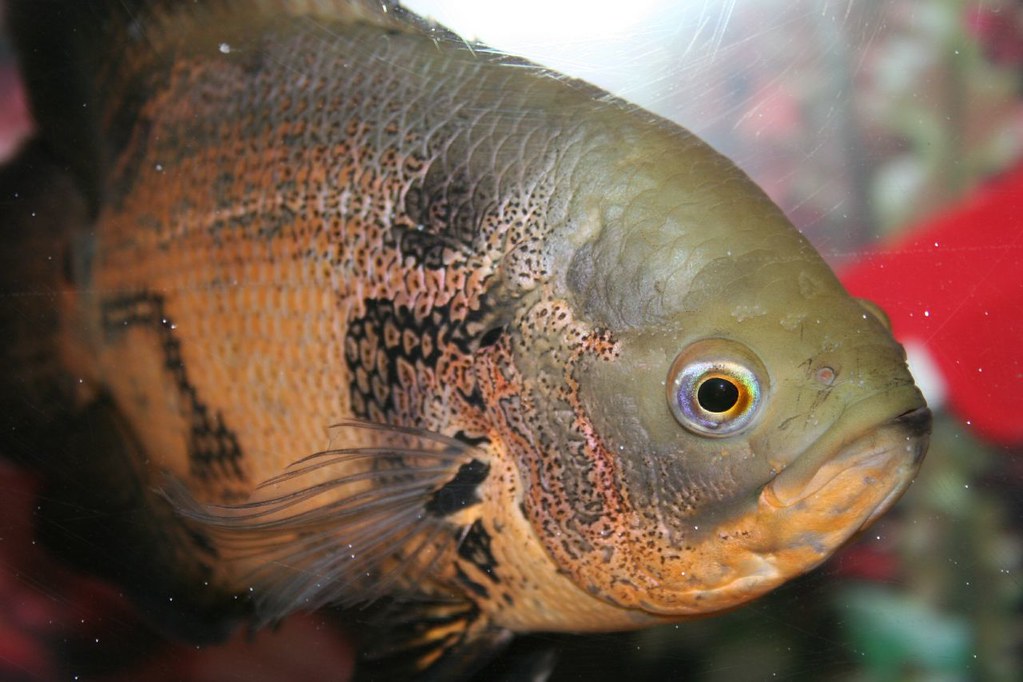
A large, intelligent South American cichlid prized for marbled orange-and-black coloration and interactive behavior. Adults typically reach 10–12 inches in captivity (up to 14 inches in the wild) and commonly live 8–15 years under aquarium care, with wild lifespans reaching around 20 years. Despite their personable tendencies, these fish are strongly territorial and aggressive, making them unsuitable for beginners or crowded community tanks.
Care focuses on space, stable water, and a varied omnivorous diet: provide a minimum 55-gallon tank for one specimen (add about 30 gallons per additional fish), maintain 74–81°F (23–27°C), pH 6–8 and hardness 5–20 dGH, and use strong filtration to handle a high bioload. Use sand substrate, securely anchored decor and hardy plants since the fish will dig and rearrange the tank. Feed high-quality pellets plus live or frozen proteins (brine shrimp, daphnia) and plant-based foods, split into two to three small feedings daily. Choose only large, robust tank mates if attempting a community setup, and monitor for common issues (hole-in-the-head, ich, fin rot); prevention relies on consistent water parameters, good nutrition, and routine maintenance. Individual requirements vary by temperament and setup, so prioritize space, water stability, and diet diversity.
At a Glance
A large South American cichlid kept by hobbyists for its intelligence, distinctive marbled orange-and-black appearance, and interactive behavior. They require substantial space and stable water conditions due to territorial, aggressive tendencies and a high bioload.
| Species type | Freshwater cichlid |
|---|---|
| Adult size | 10–12 in (25–30 cm) |
| Lifespan | 8–15 years |
| Temperament |
|
| Diet type | Omnivore |
| Tank size | 55 gallons (208 L) |
| Water temperature | 74–81°F (23–27°C) |
| pH range | 6–8 |
| Care difficulty | Intermediate |
| Beginner friendly | Not recommended for beginners |
Quick Overview
Oscar Fish suit aquarists who can provide substantial space, steady water parameters, and experience with territorial cichlids. Their intelligence, interactive ‘river dog’ behavior, and striking marbled orange-and-black coloration make them attractive display fish, but they can be aggressive toward tank mates.
The most defining trait is the combination of notable intelligence and strong territoriality. Key ownership realities include a minimum 55-gallon tank per fish, robust filtration for a high bioload, a varied omnivorous diet, and careful tank-mate selection; these factors generally make oscars a better match for intermediate keepers than for beginners.
Tank & Water Setup
Provide at least a 55-gallon tank for a single oscar and add roughly 30 gallons for each additional fish; a long, wide footprint is preferable to give room for swimming and territorial separation. Use robust filtration sized for a heavy bioload and aim for a noticeable water flow—canister or high-capacity power filters are common choices; a bubbler is optional to aid oxygen exchange. A fully cycled tank is required before introducing oscars.
Stable water parameters are critical to prevent stress and common diseases in this species. Maintain water temperature at 74–81°F (23–27°C), pH around 6–8, and hardness about 5–20 dGH; use a sand substrate with scattered rocks, caves and firmly anchored hardy plants (Java fern, Java moss) because oscars dig and rearrange decor. Provide lighting to establish day/night cycles and secure decorations to prevent collapse when the fish moves substrate or investigates hiding spots.
Feeding & Diet
Omnivore: oscars eat both animal protein and plant matter and do best on a varied diet that includes prepared pellets plus live or frozen foods and vegetable items.
Diet variety and careful portion control help prevent nutritional gaps and problems from overfeeding.
- Main food items
- High-quality pellets or flakes
- Live or frozen foods — daphnia, brine shrimp
- Algae wafers and green vegetables
- Feeding frequency
- 2–3 times per day
- Feed only what is consumed within two minutes per session
- Foods to avoid
- Small fish and invertebrates (shrimp, crabs) as tank additions
Tank Mates & Compatibility
Oscars are intelligent but strongly territorial cichlids; they can bully or eat smaller tank mates and may fight conspecifics, especially during breeding. They often do best in a species-focused setup or in at least a pair with plenty of space—use a 55-gallon minimum for one oscar and add roughly 30 gallons per additional fish—and monitor interactions closely to prevent sustained aggression or injury.
Choose large, robust, or similarly territorial species that can tolerate an oscar’s temperament; commonly reported-compatible options include bichirs, silver dollars, sailfin plecos, arowanas, jaguar cichlids, green terrors, and severum cichlids. Avoid small fish, shrimp, crabs, and delicate community species that oscars can harass or eat, and be prepared to separate fish if compatibility issues arise. Research compatibility and required tank size for each potential tank mate before adding new fish.
Health & Lifespan
In captivity, oscars typically live 8–15 years; wild individuals can reach around 20 years. Males and females have similar lifespans.
Water quality has a direct impact on oscar health: stable parameters, low waste levels, and good oxygenation reduce stress and disease risk. Maintain routine water changes, monitor temperature, pH and hardness, quarantine new additions, and avoid overfeeding to limit bacterial, parasitic, and parasitic outbreaks.
- Hole in the head
- Ich (white spot disease)
- Fin rot
Consistent tank maintenance is the most effective way to prevent disease and keep oscars healthy.
Pros & Cons (Honest)
- Intelligent, interactive behavior (often recognizes owners)
- Striking marbled orange-and-black coloration
- Long-lived in captivity (8–15 years)
- Widely available and generally affordable
- Moderate care level for owners who can provide space and stable water
- Strongly territorial and aggressive toward many tank mates
- Requires a large tank and robust filtration due to a high bioload
- Not recommended for beginner aquarists
- Will eat or harass small fish and invertebrates
- Digs and rearranges substrate; can uproot plants and topple decorations
Final Considerations
Best suited to intermediate keepers who can provide a large, well-filtered aquarium, steady water parameters, and a varied omnivorous diet; these owners can appreciate the oscar’s intelligence and interactive behavior. Best matched with caretakers willing to commit to generous space, careful tank-mate choices, and routine maintenance.
Those with small tanks, mixed-species community setups, or limited ability to manage aggressive, territorial fish should think twice before adding an oscar. Not recommended for beginners or for tanks containing small or delicate species that an oscar may harass or eat.