
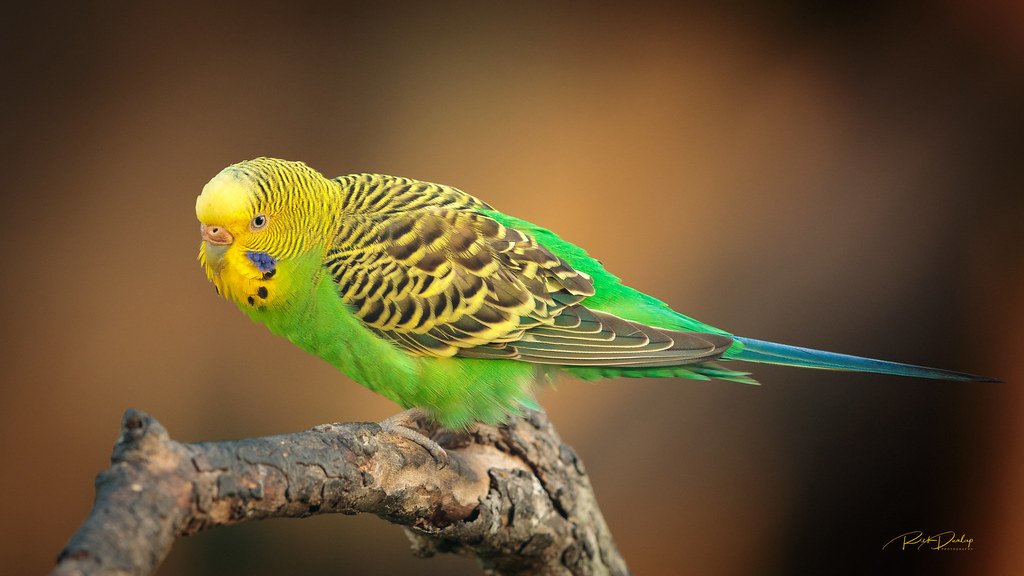
Description: The budgie (budgerigar or parakeet) is a small parrot native to Australia, typically 6–7 inches long in the wild and usually green in the nominate form. The Latin name refers to a “song bird with wavy lines.” Captive birds occur in many color mutations and two common types are the standard/American and the larger English (show) budgie.
Natural habitat: Wild budgies are nomadic grassland birds that move in large flocks seeking water. They breed in the rainy season and nest in tree hollows or limbs. Their range and behavior in the wild explain their need for regular water, flight space and social contact in captivity.
Lifespan: Typical lifespan is about 7–15 years; lifespan is shorter when birds are poorly cared for. English show budgies may have reduced longevity related to breeding practices.
Care & feeding: Budgies are primarily granivores in the wild but require a varied captive diet for long-term health. Seed-only diets commonly cause obesity, fatty tumors, liver disease and iodine-related problems such as goiter. Practical feeding and husbandry guidance:
- Diet: Use a high-quality pellet or formulated daily diet as the staple. Offer a limited seed mix as a treat to avoid seed addiction. Provide fresh leafy greens and a variety of vegetables daily; offer fruit in moderation.
- Supplements: Provide a cuttlebone or mineral block for calcium and beak maintenance. Monitor iodine sources if goiter risk is suspected.
- Water: Fresh water available at all times; change daily.
- Cage & environment: Provide the largest cage possible; a single budgie should have room to fly and exercise daily outside the cage under supervision. Include varied perch diameters, safe chewable toys and foraging opportunities.
- Exercise & social needs: Budgies are social and need regular interaction or a compatible companion. A lone budgie often becomes more human-focused; pairs/colonies suit owners who want low-handling birds.
- Veterinary care: Schedule regular avian check-ups and seek an avian veterinarian promptly for weight loss, changes in droppings, breathing changes, fluffed appearance or discharge.
Personality & behavior: Budgies are social, curious and can be hand-tamed with patience. They tolerate supervised children if handled gently; adult supervision is recommended because small fingers can be injured. Budgies kept isolated typically suffer behavioral and welfare problems.
Speech & sound: Among small parrots, budgies are excellent mimics. Males generally learn more words and phrases, though females can whistle and learn some vocabulary. Exceptional individuals have been documented with very large vocabularies.
Common health conditions and signs to watch for: Budgies are prone to obesity, fatty tumors, liver disease, foot problems, scaly face/leg mites, intestinal parasites, tumors and conditions related to an all-seed diet (including goiter). Psittacosis can also occur. Watch for lethargy, fluffed feathers, appetite change, droppings change, nasal or ocular discharge, sneezing, breathing difficulty or abnormal scabbing around the cere, eyes or legs. Prompt veterinary evaluation is important.
Breeding, mutations & sexing: More than 70 color and pattern mutations exist. Sex is usually apparent by 6–8 months: adult males typically have a blue cere, females a pink or brown cere. Young birds are difficult to sex visually with certainty.
Practical checklist for new owners:
- Provide a pellet-based diet supplemented with fresh vegetables and limited seed.
- Offer a spacious cage plus daily supervised out-of-cage flight/exercise.
- Provide varied perches, foraging toys and regular social interaction.
- Weigh regularly and seek avian veterinary care for any health changes.
- Supervise interactions with children; avoid housing a budgie in isolation without enrichment or companionship.
Budgie (Parakeet)
The budgerigar is a small, social parrot native to Australia, historically a green, 6–7 inch grassland flier that now occurs in dozens of captive color and pattern mutations. Widely kept as a companion, these birds typically live 7–15 years under good care; lifespan and health vary with diet, genetics and husbandry.
Practical care priorities are a balanced pellet-based diet with fresh vegetables and limited seed treats, constant access to clean water, a spacious cage with varied perch diameters and foraging toys, and daily supervised out-of-cage exercise. Social interaction or a compatible avian companion, routine weight checks and prompt avian veterinary care for changes in appetite, droppings, breathing or feather/skin condition help prevent common issues such as obesity, fatty liver, scaly-face mites and diet-related disorders.
At a Glance
A friendly companion parrot native to Australia, budgies are small, active birds often kept singly or in flocks and available in many captive color mutations. They require a balanced pellet-based diet, regular social contact or a compatible avian companion, and daily supervised out-of-cage exercise to prevent common diet and activity related health problems.
| Species type | Small parrot (budgerigar) |
|---|---|
| Adult size | 6–9.5 in (15–24 cm), ~30–60 g |
| Colors | green, blue, yellow, white |
| Lifespan | 7–15 years |
| Temperament | social, curious, playful, affectionate |
| Vocality | Vocal |
| Diet type | Pellet-based |
| Cage size |
|
| Social needs | Flock Preferred, needs regular social contact, single birds require daily interaction |
| Care difficulty | Intermediate |
| Beginner friendly | Yes, with research |
Quick Overview
Compact, active companion parrots suited to owners who can provide daily interaction, supervised out-of-cage flight time and basic avian care. They appeal to people who want a small, trainable bird available in many captive color mutations.
Budgies are highly social, small parrots that often respond well to regular interaction and can become skilled mimics. Expect a typical lifespan around 7–15 years with proper care; practical ownership realities include a pellet-focused diet with fresh vegetables and limited seed treats, regular exercise and foraging opportunities, and vigilance for weight-related issues, mites and other diet-linked conditions that require avian veterinary attention.
Housing & Environment
Provide the largest cage practical for the home and position it so the bird can see household activity without being in a traffic zone; a single budgie should also receive regular supervised out-of-cage exercise. Use bar spacing and door hardware appropriate to a small parrot to prevent escape or entrapment, and include varied perch diameters and textures placed to allow short flights between perches while avoiding perches directly above food and water.
A stimulating and safe environment is essential for a budgie’s physical and mental wellbeing. Offer a rotation of safe chewable toys, bells, swings and foraging opportunities to encourage activity and prevent boredom; choose durable, non-toxic materials and replace items that show wear. Arrange perches and toys to promote movement and natural behaviors rather than crowding the cage interior.
Place the cage away from drafts, kitchen fumes, direct sun and rapid temperature changes, and avoid areas with frequent smoke or strong odors. Maintain a consistent indoor climate appropriate for household birds, supervise daily out-of-cage flight and social interaction, and routinely inspect the environment for hazards such as loose threads, toxic plants or accessible small objects.
Feeding & Diet
Budgies are primarily granivores that eat seeds and plant material in the wild, but captive care favors a balanced pellet-based diet supplemented with fresh vegetables and limited seed treats. Seed-only feeding is linked to obesity, fatty tumors and liver disease, so many keepers use formulated daily diets as the staple and reserve seeds for enrichment or occasional treats.
Dietary variety helps prevent obesity and nutrient deficiencies and supports long-term liver and overall health.
- Main food items
- High-quality pellet or formulated daily diet (staple)
- Limited seed mix as a treat
- Fresh foods
- Leafy greens and mixed vegetables daily
- Fruit in moderation
- Feeding frequency
- Pellets available daily; fresh foods offered daily
- Seed given sparingly as a treat
- Foods to strictly avoid
- Avocado, chocolate, caffeine, alcohol
- High-salt or high-fat human snacks; fruit pits
- Supplementation
- Cuttlebone or mineral block for calcium and beak maintenance
- Veterinary-guided supplements only if indicated (iodine, multivitamins)
Social Needs & Behavior
Budgies are highly social, flock-oriented parrots that generally do best with regular company—either a compatible avian companion or consistent interaction with a caregiver. Some owners keep a single budgie as a focused companion bird; such birds typically require more human time to remain well socialized. Budgies can be hand-tamed and form strong bonds with people when handled patiently; they tolerate supervised children when interactions are gentle and monitored.
Meeting a budgie’s social needs typically requires daily dedicated interaction and supervised out-of-cage time. Vocal and active, budgies produce frequent chirps, whistles and mimicry; males often develop larger vocabularies, though individual ability varies. Daily supervised exercise and opportunities for play, training and foraging reduce the risk of boredom-related behaviors and support mental stimulation.
Signs of stress or boredom can include increased screaming, repetitive pacing, feather picking or withdrawal and changes in appetite or vocal patterns. Responses vary by individual—some budgies are more independent while others demand near-constant engagement—so owners should monitor behavior, provide varied enrichment and seek changes to housing or veterinary advice if problem behaviors appear.
Health & Lifespan
Typical lifespan is 7–15 years with proper care; poor husbandry, accidents or inbreeding (in some show lines) can shorten life expectancy.
Find an avian veterinarian before acquiring a budgie and schedule routine wellness visits. General preventive care includes annual checkups, routine weight monitoring, keeping cages and feeding dishes clean, and minimizing exposure to toxic fumes from non-stick cookware, air fresheners and candles. Seek prompt veterinary attention for changes in appetite, droppings, breathing, feather condition or abnormal scabbing.
- Obesity
- Fatty liver disease and fatty tumors
- Scaly face/leg mites
- Psittacosis
Avian-specialist veterinary care is essential for accurate diagnosis, prevention and effective treatment of budgie-specific health issues.
Pros & Cons (Honest)
- Small size and fits modest living spaces
- Highly social and can form strong bonds with handlers
- Excellent mimics; many males learn words and whistles
- Wide range of color mutations available
- Common and typically lower-cost to acquire than larger parrots
- Prone to obesity and diet-related conditions on seed-only diets
- Requires daily interaction or a compatible companion
- Susceptible to scaly face/leg mites, fatty liver disease, tumors and psittacosis
- Can be vocal and active, which may not suit very quiet households
- Small size makes them vulnerable to rough handling by children
Final Considerations
Ideal for owners who can provide daily interaction, supervised out-of-cage exercise and a varied pellet-based diet with fresh vegetables; these factors support bonding, training and long-term wellbeing. Choose a budgie if regular social time, basic foraging enrichment and routine avian care fit into the household schedule.
Not a strong fit for people who cannot commit daily attention, who cannot provide supervised flight time, or who live with very young children who may handle birds roughly. Think twice if the household cannot realistically provide the time, supervision or dietary commitment a budgie needs.