
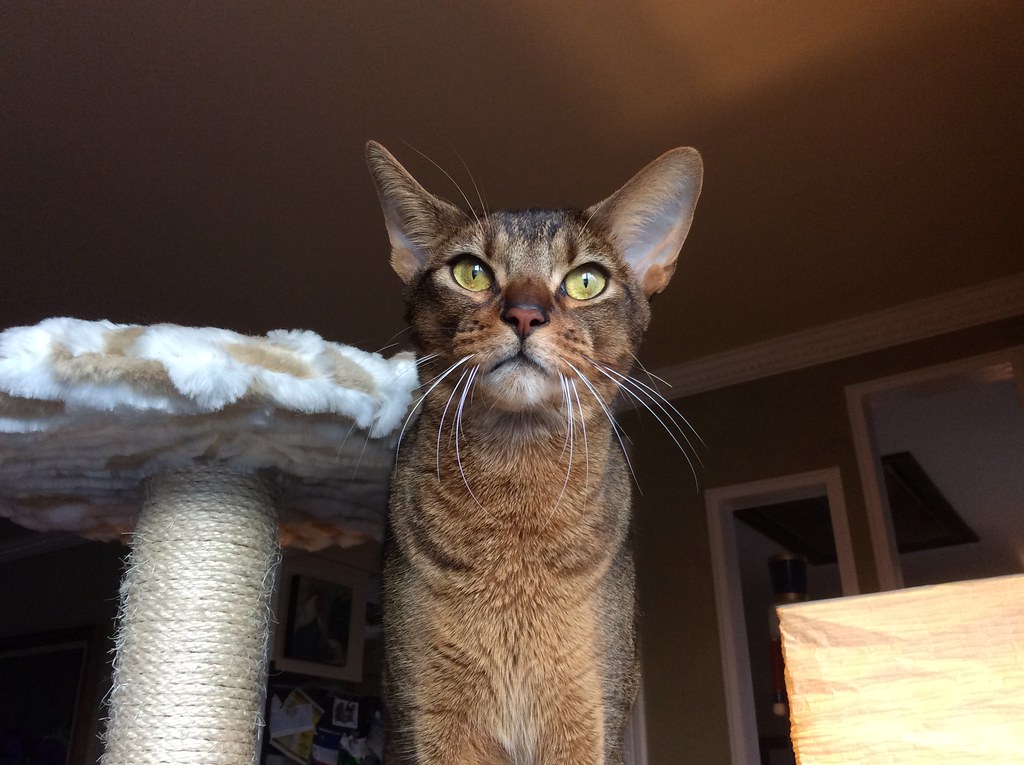
This medium-sized, athletic cat combines a lithe, muscular build with an iridescent, warmly ticked short coat and large almond-shaped eyes—features often compared to a small mountain lion. Adult females generally weigh 6–9 pounds and males 7–12 pounds; life span typically ranges 14–17+ years, and many individuals live well into their twenties. The Somali is the long-haired, semi-longhaired variant that shares the same expressive face and ticking pattern.
Highly intelligent, playful and affectionate, these cats are intensely curious and require regular mental and physical stimulation: provide vertical perches, puzzle toys and interactive play to satisfy energy levels and prevent boredom. Grooming is low-maintenance—an occasional brushing, an intermittent damp rub and baths only as needed—while nails should be trimmed about every two weeks and dental care begun early. Be aware of breed-associated risks (PK‑Def, PRA, patellar luxation and renal amyloidosis); request genetic test certification for PK‑Def and PRA from breeders and work with a veterinarian on screening and prevention. Individual variation is common, so match activity and social needs to household routines and other pets.
At a Glance
Abyssinian is a sleek, short-coated breed recognized for its distinctive agouti ticking and lively curiosity. These cats are highly energetic and enjoy interactive play, climbing and exploring vertical spaces.
| Origin | Developed and refined in Britain, ancestral links to Ethiopia and Bay of Bengal in India |
|---|---|
| Size | Medium |
| Weight | Females 6–9 lb, Males 7–12 lb |
| Lifespan | 14–17+ years, many live into their 20s |
| Coat length | Short |
| Colors | Ruddy, Cinnamon, Chocolate, Blue, Fawn, Lilac, and silver variants |
| Temperament |
|
| Energy level | High, very active, needs mental and physical stimulation |
| Vocality | Medium, social and communicative |
| Shedding | Low, sheds very little |
| Grooming needs |
|
| Good with children | Often good with children, depends on temperament and socialization |
Quick Overview
Abyssinian is a lively, athletic breed prized for its warmly ticked, iridescent coat and alert, graceful movement. Curious, highly interactive and playful, Abyssinians thrive with engagement rather than long periods of solitude.
They pair keen intelligence with affectionate, social behavior and often prefer high perches and exploratory play to laps; provide puzzle toys, interactive sessions and vertical space. Grooming needs are low, but routine nail and dental care are important, and prospective owners should seek breeders who screen for breed-associated genetic conditions such as PK‑Def and PRA.
Temperament & Personality
Abyssinians combine sharp intelligence with an energetic, playful nature and a pronounced curiosity that drives much of their behavior. Intelligent, animated and playful, Abyssinians do best with regular interaction and environmental enrichment to prevent boredom. They are affectionate and social with their families yet often prefer to show that affection through active engagement rather than extended lap-sitting; expect them to patrol high perches, investigate new sights and find inventive ways to join activities.
These cats project confidence and agility, with a regal carriage that belies a very mischievous streak. They tend to be confident and social with familiar people but may struggle in very crowded multi-cat households where attention is diluted. With strangers they are usually curious and alert rather than fearful, though individual temperament and early socialization shape how outgoing or reserved any given cat will be.
Family Life: Kids, Cats & Other Pets
Abyssinians are often good with children when socialized and taught to interact respectfully. They typically enjoy interactive play and can match well with active families, but supervision and gentle handling by young children are important. Early positive experiences help build tolerance for household activity; teach children to avoid rough handling, sudden grabbing and to respect the cat’s escape routes.
These cats are social with other companion animals but may not thrive in very crowded multi-cat homes where attention is diluted. Abyssinians can live well with compatible dogs, provided introductions are gradual and supervised, and may show intense curiosity toward small animals so those pets should be securely housed. Use gradual introductions, separate resources and plenty of vertical space to reduce tension, and remember individual temperament and socialization shape outcomes more than breed alone.
Activity, Play & Enrichment
These cats are energetic, athletic and driven by a strong hunting instinct, preferring play that involves chasing, stalking and vertical movement. They often seek high vantage points and visual stimulation, enjoying views of outdoor activity such as birds at feeders.
Mental and physical stimulation reduce boredom, support wellbeing and channel natural hunting instincts into positive outlets for indoor cats.
- Interactive wand and feather toys to mimic prey and encourage stalking and pouncing
- Puzzle feeders and treat-dispensing toys to promote foraging and problem solving
- Climbing structures, cat trees and wall-mounted shelves to satisfy vertical exploration
- Window perches and bird-friendly views to provide visual enrichment
- Interactive play sessions and short chase games using toys on strings
Training tips
- Use clicker or target training to teach simple behaviors and provide mental engagement
- Reinforce name recognition and basic recall with positive rewards
Grooming, Shedding & Coat Care
Abyssinians have a short, resilient, ticked coat that is easy to maintain and typically requires minimal upkeep. Regular basic care keeps the coat glossy and supports overall health.
| Coat type | Short single coat with agouti ticking |
|---|---|
| Shedding level | Low, sheds very little |
| Grooming frequency | Occasional brushing, intermittent damp rubs as needed |
| Bathing | As needed, begin baths in kittenhood |
| Nail trimming | Every two weeks |
| Ear care | Check regularly, clean if soiled |
| Teeth brushing | Regular brushing from an early age with vet-approved toothpaste |
| Matting risk | Low |
Health & Lifespan
Life expectancy is 14–17+ years, and many Abyssinians have been known to live well into their 20s.
Responsible care includes regular veterinary checkups, keeping vaccinations current, spaying or neutering, routine dental care and maintaining a healthy weight through proper nutrition and enrichment. Monitor behavior and appetite and consult a veterinarian promptly if concerns arise.
- PK-Def (Pyruvate Kinase Deficiency) — hereditary anemia; genetic testing available
- PRA (Progressive Retinal Atrophy) — hereditary retinal disease that can lead to blindness; genetic testing available
- PL (Patella Luxation) — kneecap instability
- RA (Renal Amyloidosis) — amyloid accumulation in the kidneys and possibly other organs
Choose a responsible, transparent breeder who provides health testing documentation or adopt from a reputable shelter.
Feeding & Nutrition
Abyssinians are obligate carnivores, so protein-rich diets that prioritize animal-based ingredients suit their needs. Wet food can help increase dietary moisture and support hydration, while dry food offers convenience and may assist with some aspects of oral care; many owners use a mix of both depending on preferences and veterinary guidance. Consistently high-quality food and reliable access to fresh water are important for long-term health. Offer fresh, clean water daily and consider placing the water bowl away from food and using a filtered stainless steel fountain if the cat is reluctant to drink.
Provide measured portions and monitor body condition rather than relying on free feeding; adjust intake and treats to match activity and life stage. Indoor cats may need closer attention to portions and enrichment to maintain a healthy weight; use puzzle feeders and interactive play to support foraging behavior and calorie expenditure. No breed-specific dietary restrictions are detailed in the provided facts, so work with a veterinarian to select appropriate formulations and portioning for life stage, medical needs and weight management.
Pros & Cons (Honest)
- Expressive, warmly ticked coat and striking appearance
- Intelligent and highly interactive with owners
- Playful, athletic and excellent at enrichment activities
- Low-maintenance coat with minimal grooming needs
- Long lifespan when well cared for
- High energy and curiosity require regular mental and physical stimulation
- May prefer activity over lap time and not suit owners seeking a sedentary lap cat
- Prone to specific genetic conditions (PK‑Def, PRA, PL, renal amyloidosis)
- Can be less content in very crowded multi-cat households
- Strong prey drive may complicate life with small pets
Final Thoughts
Abyssinian fits owners who enjoy an interactive, playful companion and can provide regular mental and physical enrichment. They do best in homes that offer vertical space, engaging toys and consistent social interaction. Best matched with active households where curiosity and play are welcomed.
Those seeking a quiet, sedentary lap cat or who cannot commit to daily engagement may want to consider other breeds. Strong prey drive and sensitivity to attention dilution mean careful introductions with small animals and management in multi-cat homes are important. Think twice if limited time, small pet safety concerns, or a very calm companion are priorities.