
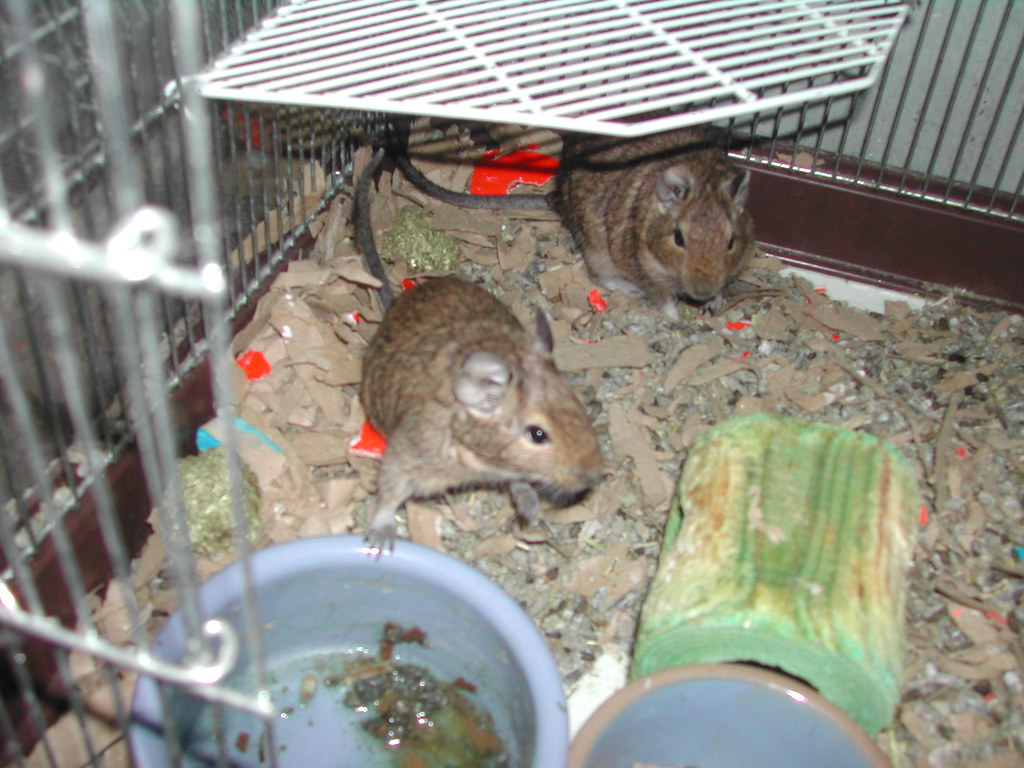
Small, social, diurnal rodents that are active during daylight and form strong bonds with cage-mates. Typically live about 5–8 years and do best in same-sex pairs or small groups; chewing opportunities and regular enrichment are essential to control tooth growth and prevent boredom.
Care priorities are practical: a large, well-ventilated multi-level wire cage with solid flooring, unlimited grass hay and a formulated high-fiber pellet as dietary staples, and strict avoidance of sugary treats and fruit because of diabetes risk. Provide regular dust baths several times weekly, safe chew toys, a solid-surface running wheel, daily supervised out-of-cage exercise, and routine checks of weight and teeth; consult an exotic-pet veterinarian for preventive care and adjust husbandry to each animal’s needs.
At a Glance
Degus are small, social rodents kept as daytime pets, noted for intelligence and active behavior.
Care requires a large multi-level wire cage, a high-fiber herbivorous diet with unlimited grass hay, and regular opportunities to chew and exercise to prevent dental and behavioral issues.
| Species type | Rodent |
|---|---|
| Adult size |
|
| Lifespan | 5–8 years |
| Temperament | social, curious, active, intelligent |
| Activity pattern | Diurnal |
| Diet type | Herbivore |
| Housing type | Cage (multi-level, solid flooring) |
| Social needs | Group Preferred, same-sex pairs or small groups |
| Care difficulty | Intermediate |
| Beginner friendly | Depends on commitment level |
Quick Overview
Suitable for owners able to provide daily interaction, regular supervised exercise, and species-specific husbandry. They appeal to people seeking an active, intelligent small pet that is awake during daylight hours and responds to enrichment and handling.
They are highly social, diurnal rodents that typically do best with same-sex companions and regular interaction. Key realities include the need for a large multi-level wire cage with solid flooring, a high-fiber herbivorous diet with unlimited grass hay and formulated pellets, strict avoidance of sugary treats because of diabetes risk, frequent opportunities to chew and a dust bath routine, and routine monitoring of weight and teeth; lifespan is about 5–8 years and veterinary care is best provided by a clinician experienced with exotic small mammals.
Housing & Environment
Degus do best in a large, well-ventilated multi-level wire cage with solid flooring; vertical space and climbing opportunities matter because they are active and agile. Glass tanks and small single-level enclosures are generally unsuitable due to poor ventilation and limited room for climbing; full free-roam is possible only with careful supervision and a fully degu-proofed space.
Adequate space and daily enrichment are critical to prevent boredom, dental overgrowth, and behavioral problems. Use dust-free paper-based bedding or kiln-dried aspen and avoid aromatic or dusty softwoods; provide multiple hiding spots, shelves, ramps, tunnels, safe wooden chew toys or branches, and an appropriately sized solid-surface running wheel. Keep the cage in a cool, dry, well-ventilated area out of direct sun and drafts, and offer regular supervised out-of-cage play and daily foraging or puzzle-type enrichment.
Spot-clean soiled bedding and replace wet areas daily, refresh hay and food bowls daily, and perform a thorough cage clean and full bedding change on a regular schedule (commonly weekly). Monitor the environment for dust, mold, or ammonia buildup and adjust cleaning frequency and ventilation as needed for health and comfort.
Feeding & Diet
Degus are herbivores that do best on a high-fiber diet centered on grass hay and a low-sugar, formulated pellet; water should be available at all times.
Proper nutrition—consistent access to high-quality hay and a low-sugar pellet—helps reduce dental problems and lowers diabetes risk, supporting a healthier lifespan.
- Main food items
- Unlimited grass hay (timothy or other grass hays)
- Low-sugar commercial degu pellets
- Fresh clean water
- Treats and extras
- Small amounts of leafy greens (offered sparingly)
- Safe wooden chew toys and hay cubes
- Feeding frequency
- Hay: unlimited
- Pellets: measured daily portions
- Water: available at all times
- Foods to avoid
- Fruit
- Sugary treats and high-sugar vegetables
- High-fat seeds and nuts
Handling & Temperament
Degus are social, curious, and active during the day; they investigate, climb, and interact with people and cage-mates, but may be cautious or nippy without gradual socialization. They respond well to consistent, gentle handling and enrichment but are not typically sedentary lap pets—owners should expect regular supervised out-of-cage activity and short daily interaction sessions to maintain tameness.
Learn to read a degu’s body language and respect its limits. Begin handling with short, calm sessions every day, offering treats and letting the animal climb onto an open hand; scoop from below and support the body rather than grabbing, and avoid the tail. Increase handling duration gradually, use quiet voices and slow movements, and provide escape options so the animal can retreat. Signs of stress include freezing, frantic escape attempts, repeated biting, vocal distress, or changes in grooming and appetite; reduce handling and rebuild trust slowly if these occur, and seek advice from an exotic-pet veterinarian or experienced keeper for persistent behavioral concerns.
Health & Lifespan
Degus typically live 5–8 years in captivity; individual lifespans depend on genetics, husbandry, and access to veterinary care.
Responsible care includes regular checkups with a veterinarian experienced with exotic small mammals, maintaining a clean well-ventilated enclosure, providing a high-fiber low-sugar diet, and monitoring weight, teeth, appetite, and behavior so problems are caught early.
- Dental disease (overgrown teeth, malocclusion)
- Diabetes mellitus (sensitivity to sugar)
Find a veterinarian experienced with small exotic mammals before acquiring a degu.
Pros & Cons (Honest)
- Social species that typically do well with same-sex companions
- Diurnal and engaging—active during the day for interactive owners
- Intelligent and responds well to toys, puzzles, and handling when socialized
- Longer-lived than many small rodents (about 5–8 years)
- Require a large multi-level, well-ventilated cage and daily enrichment
- Prone to dental problems—need constant chewing opportunities
- High risk of diabetes—must avoid sugary foods and fruit
- Can be nippy or stressed without proper socialization and handling
- Need veterinary care from clinicians experienced with exotic small mammals
Final Considerations
Active, social owners who can provide daily supervised interaction, a large multi-level cage, and frequent enrichment are most likely to enjoy keeping a degu. Best suited to owners who can provide daily interaction, ample space, and consistent low-sugar dietary management.
Those seeking a low-maintenance, solitary, or very child-friendly lap pet should think twice; degus require time, environment adjustments, and handlers who read body language. Not recommended for owners unable to provide regular care, enrichment, or access to a veterinarian experienced with exotic small mammals.