
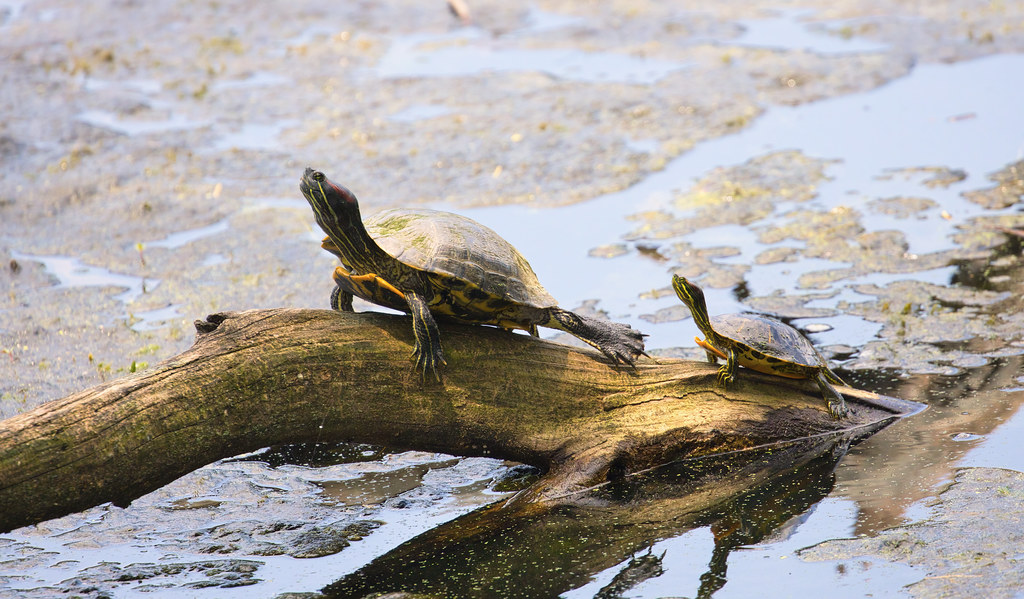
Recognizable by a bright red stripe behind each eye, this common North American pond turtle is semi‑aquatic and active. It requires both spacious water for swimming and a warm, dry basking area; adults commonly reach 8–12 inches (20–30 cm) carapace and can live 20–30 years or longer, so ownership is a long‑term commitment.
Core care priorities are straightforward: a large, well‑filtered aquarium (75–100+ gallons for adults), water temperatures maintained around 75–80°F (24–27°C) with a basking spot at 85–90°F (29–32°C), and a UVB lamp to support shell and bone health. Feed a varied omnivorous diet—quality commercial pellets as a staple, plenty of leafy greens and aquatic plants, and animal protein (insects, shrimp, feeder fish) more often for juveniles. Emphasize strong filtration, regular water changes to preserve water quality, secure basking and hiding sites, and routine veterinary checks; specific needs can vary by individual and subspecies.
At a Glance
A semi‑aquatic turtle often kept by hobbyists, the red‑eared slider needs both ample swimming area and a secure basking spot. Ownership is a long‑term commitment because individuals reach adult size within a few years and can live for decades.
Adults typically reach about 8–12 inches (20–30 cm) carapace, require strong filtration, UVB light, and a varied omnivorous diet.
| Species type | Pond turtle (Trachemys scripta elegans) |
|---|---|
| Adult size | 8–12 inches (20–30 cm) |
| Lifespan | 20–30+ years |
| Temperament |
|
| Activity pattern | Diurnal |
| Diet type | Omnivore |
| Housing type | Semi-aquatic |
| Care difficulty | Intermediate |
| Beginner friendly | Depends on commitment level |
Quick Overview
Red‑eared sliders are semi‑aquatic turtles that appeal to owners who want an active, visible pet and can provide substantial space and regular maintenance. They suit people prepared for a long‑term commitment and hands‑on care rather than a low‑effort companion.
Their combination of active swimming and regular basking makes them a visibly engaging semi‑aquatic pet. Owners should plan for large water volume, robust filtration, UVB lighting, and a varied omnivorous diet; requirements and costs increase as individuals reach adult size and live for decades.
Care & Housing
Red‑eared sliders need a semi‑aquatic enclosure with substantial water volume for sustained swimming plus a secure, dry basking platform. Adults generally require large aquaria or pond setups; plan for strong filtration, accessible basking and hiding sites, and a stable layout before purchase.
Set up heating, lighting, and water filtration and confirm stable temperatures and water quality before bringing the animal home. Use a bare‑bottom tank or an easily cleaned substrate to simplify maintenance and reduce ingestion risk; avoid small loose gravel. Provide a ramp or platform that allows easy access from water to a dry basking area and at least one hiding spot in the water.
Maintain water temperature in a comfortable range for the species and provide a warmer basking spot; a reliable heat source over the basking area and a UVB lamp are necessary for shell and bone health. Prioritize a high‑capacity filter and regular water changes to control waste and support oxygenation; humidity control is handled by the water/basking balance rather than misting for this semi‑aquatic species.
Feeding & Diet
Red‑eared sliders are omnivores with a diet that shifts from more animal protein in juveniles to increased plant matter in adults. Proper nutrition and consistent supplementation support healthy shell growth and long‑term health.
- Main food items
- Commercial turtle pellets (staple)
- Dark leafy greens and aquatic plants
- Animal protein: insects, crustaceans, earthworms, feeder fish (more for juveniles)
- Feeding frequency
- Juveniles: daily
- Adults: every 2–3 days; offer vegetables more frequently
- Prey sizing
- Items small enough to swallow easily; avoid prey larger than head width
- Gut-loading and supplementation
- Gut‑load live feeders with nutritious food
- Provide calcium supplementation and ensure access to UVB for vitamin D3 synthesis
- Foods to avoid
- Iceberg lettuce
- Fatty or processed human foods; avoid relying on low‑quality feeder fish
Handling & Temperament
Red‑eared sliders are typically active and alert in their aquatic environment but can be wary when removed from water; many individuals tolerate only limited handling and may snap or try to escape if frightened. They are not inherently cuddly pets and are best kept for observation and aquatic enrichment rather than frequent physical interaction.
Reading the animal’s body language and respecting its limits is essential. Limit handling to short, necessary sessions (tank maintenance, vet care, occasional supervised interaction) and watch for stress signs such as retreating into the shell, hissing, rapid struggling, or refusal to feed. When handling is required, support the carapace and plastron with both hands, avoid lifting by the tail or limbs, work close to a secure surface, and practice good hygiene before and after contact to reduce zoonotic risk. Build tolerance slowly with consistent, calm routines and minimal pressure; some sliders become more tolerant over time while others remain best handled rarely.
Health & Lifespan
Red‑eared sliders commonly live 20–30 years or longer when properly cared for.
Locate a veterinarian experienced with reptiles before acquiring a slider; early access to an exotic‑pet vet supports preventive care and timely treatment. Ongoing health maintenance includes regular checkups, strict quarantine for any new animals, diligent water quality management, clean enclosures, appropriate diet, and correct UVB and heating setup to reduce disease risk.
- Respiratory infections
- Shell rot
- Parasitic infections
- Metabolic bone disease
- Vitamin A deficiency
Reptile‑specialist veterinary care is invaluable for diagnosis, treatment, and long‑term preventive planning.
Water Quality & Filtration
Strong, high‑capacity filtration and routine water maintenance are uniquely critical for red‑eared sliders because they live in and produce waste in large volumes of water. Use a filter designed for turtles or large fish that provides mechanical and biological filtration; prioritize removal of solids, robust biological media, and adequate water movement and oxygenation.
Support filtration with regular partial water changes, debris removal, and scheduled filter maintenance; avoid replacing all biological media at once to preserve beneficial bacteria. Watch for cloudy water, odors, or excessive surface scum as indicators that cleaning or increased filtration capacity is needed.
Pros & Cons (Honest)
- Active, visibly engaging semi‑aquatic behavior — frequent swimming and basking
- Omnivorous diet allows varied feeding options
- Generally hardy when kept with correct lighting, heating, and water quality
- Require large, long‑term housing and escalating costs as they grow
- High maintenance for water quality and filtration compared with terrestrial reptiles
- Not ideal for frequent handling; can be defensive and stress easily
- Long lifespan means decades of responsibility
- Zoonotic risk (Salmonella) and strict hygiene needed when handling or cleaning
Final Considerations
Red-Eared Slider may fit owners prepared to commit to a long-lived, semi-aquatic pet and who can provide large water volume, robust filtration, a stable basking area with UVB, and regular maintenance. Best suited to owners who can meet substantial space and husbandry requirements.
Those who prefer frequent handling, minimal upkeep, or cannot accommodate growing adult size should consider alternatives before acquiring one. Not ideal for owners seeking a highly interactive, low‑effort companion.