
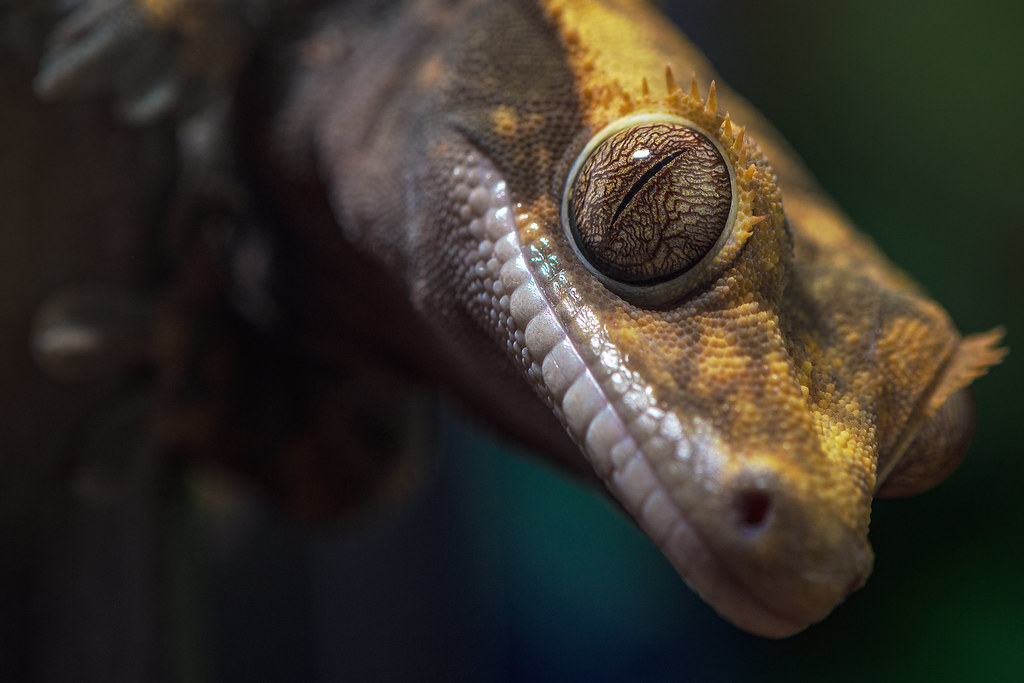
Correlophus ciliatus is an arboreal, nocturnal lizard native to New Caledonia, noted for eyelash-like crests above the eyes and adhesive toe pads that support confident climbing. Adults typically reach about 6–10 inches total length and are widely regarded as calm, manageable pets suitable for keepers transitioning from beginners to intermediate hobbyists.
Care emphasizes a tall, well-ventilated enclosure with branches and plant cover, moderate daytime temperatures around 72–78°F with cooler nights in the mid-60s, and humidity routinely refreshed through misting to roughly 50–70% (adjust to individual responses). Offer a complete powdered gecko diet as the staple with occasional gut-loaded insects, provide hiding spots and vertical enrichment, and monitor weight, activity and hydration—requirements vary by age, morph and individual, so adjust housing and feeding as needed.
At a Glance
A popular arboreal lizard from New Caledonia kept for its manageable size and distinctive eyelash-like crests. Care centers on a vertically oriented, well-ventilated enclosure with climbing structures, moderate daytime temperatures and routine humidity refreshes.
Staple nutrition is a commercially prepared complete gecko diet with occasional gut-loaded insects; adjust feeding and housing by age, morph and individual response.
| Species type | Crested gecko (Correlophus ciliatus) |
|---|---|
| Adult size |
|
| Lifespan | 10–20 years |
| Temperament |
|
| Activity pattern | Nocturnal |
| Diet type | Omnivore |
| Housing type | Arboreal |
| Care difficulty | Intermediate |
| Beginner friendly | Yes, with research |
Quick Overview
These small, arboreal, nocturnal lizards suit owners seeking a relatively low-stress, space-efficient pet with a wide range of colors and pattern morphs. They are generally calm and can tolerate handling if introduced gradually; husbandry typically includes a tall, well-ventilated enclosure, regular misting to maintain humidity, and a staple commercially prepared powdered gecko diet with occasional gut‑loaded insects.
Their aptitude for vertical enclosures combined with acceptance of a complete powdered diet makes them practical for many keepers. Owners should monitor weight, hydration and activity, adjust feeding and housing by age and morph, and be prepared for a long-term commitment with lifespans commonly over a decade.
Care & Housing
Provide a vertically oriented, well-ventilated enclosure with ample climbing structures and plant cover; Crested geckos are arboreal and benefit from height more than floor space. A common minimum for an adult is a tall enclosure (often recommended around 18 × 18 × 24 inches or a 20-gallon tall), while juveniles can be kept in smaller vertically oriented setups temporarily.
Get the environment right before bringing the animal home to reduce stress and health risks. Use easy-to-clean substrates for juveniles (paper towel or reptile carpet) and consider coconut fiber, orchid bark or a bioactive mix for adult enclosures that support humidity and planting. Prioritize multiple branches, cork bark, and foliage to create climbing routes and hiding sites, and ensure good ventilation to prevent stagnant wet conditions.
Daytime temperatures are best kept moderate, roughly 72–78°F with cooler nights into the mid-60s; crested geckos do not require a high‑temperature basking spot and can be stressed by sustained temperatures above the upper recommended range. Lighting is not strictly for heat; provide a consistent day–night cycle and consider a low‑output UVB source if desired for additional welfare benefits. Maintain routine humidity through misting so relative humidity averages about 50–70%, allowing the enclosure to dry somewhat between mistings to avoid persistent saturation.
Feeding & Diet
Crested geckos are omnivores that do well on a commercially prepared complete powdered gecko diet supplemented with occasional live feeder insects. Nutritional needs change with age and condition, so use a reliable staple diet and adjust supplemental feeding accordingly.
Proper nutrition and appropriate supplementation are central to long-term health and help prevent common disorders such as metabolic bone disease.
- Main food items
- Commercial complete powdered crested gecko diet
- Occasional live feeder insects (crickets, roaches, small mealworms)
- Feeding frequency
- Follow manufacturer instructions for powdered diets
- Offer insects more often to growing juveniles and less often to adults
- Prey sizing
- Insects no larger than the width of the gecko’s head
- Scale prey size as the animal matures
- Gut-loading and supplementation
- Gut‑load feeder insects with nutritious diets before feeding
- Dust insects with calcium and use multivitamin supplements per veterinary or manufacturer guidance
- Foods to avoid
- Wild-caught insects
- Sticky or sugary human foods and citrus
- Relying on fatty feeders (waxworms) as staples
Handling & Temperament
Crested geckos are generally calm and can tolerate handling better than many other gecko species, though individual responses vary and some animals remain skittish. They are nocturnal and may be more active after dark; juveniles often require longer acclimation and more frequent, short sessions to become comfortable.
Read the animal’s body language and respect its limits. Signs of stress include rapid or jerky movements, persistent attempts to flee, reluctance to feed, or noticeable weight loss; tail waving or sudden tail drop (autotomy) are indicators of extreme distress or defensive reaction. Build trust with gradual, predictable interactions: allow the gecko to climb onto a hand, keep sessions brief and calm several times per week, avoid handling during shedding, illness, or right after feeding, and always handle over a low, secure surface to minimize injury risk from falls.
Health & Lifespan
In captivity, crested geckos commonly live 10–20 years when properly cared for.
Locate an exotic veterinarian experienced with reptiles before acquiring a crested gecko; routine health maintenance includes regular veterinary checkups, strict quarantine for any new additions, keeping the enclosure clean and well‑managed, and monitoring weight, hydration, appetite and shedding. Early intervention for illness or injury and consistent recordkeeping of feeding and behavior reduce long‑term risks.
- Metabolic bone disease
Reptile‑specialist veterinary care is invaluable for accurate diagnosis, treatment and preventive guidance.
Tail Autotomy & Regeneration
Crested geckos can deliberately drop (autotomize) their tail when frightened or handled roughly; this is a species‑specific defensive behavior and many pet crested geckos are observed without tails. Tail loss is not usually life‑threatening but often permanent—tails rarely regenerate to their original form—so prevention and careful handling are important.
After an autotomous event, minimize handling and keep the enclosure clean and stress‑free while the wound heals; monitor closely for persistent bleeding, swelling or discharge and consult an exotic veterinarian if infection or prolonged bleeding occurs. Preventive measures include calm, minimal handling for new or stressed animals, secure enclosure furnishings to reduce fall risk, and maintaining appropriate humidity and nutrition to support recovery.
Pros & Cons (Honest)
- Manageable adult size (about 6–10 in), suitable for smaller living spaces
- Arboreal nature makes vertical enclosures practical and space-efficient
- Accepts commercially prepared complete powdered diet as a staple
- Generally calm and tolerant of handling when acclimated
- Long-lived with proper care (often 10–20 years)
- Requires routine humidity management and regular misting
- Can autotomize (drop) tail when stressed; tail loss is common
- Mostly nocturnal, so daytime interaction may be limited
- Susceptible to health issues if diet or supplementation is inadequate
- Sensitive to sustained high temperatures and poor ventilation
Final Considerations
Ideal for owners seeking a relatively space‑efficient, visually engaging arboreal pet that typically accepts a complete powdered diet and tolerates occasional handling when acclimated. Crested geckos suit keepers who can maintain a vertically oriented, well‑ventilated enclosure, manage routine humidity, and commit to long‑term care.
Not the best choice for those wanting a highly interactive, daytime companion or for households unable to provide stable temperatures, regular misting, or access to an experienced exotic veterinarian. Prospective owners should weigh nocturnal habits, humidity needs, and the requirement for species‑appropriate veterinary support before acquiring one.