
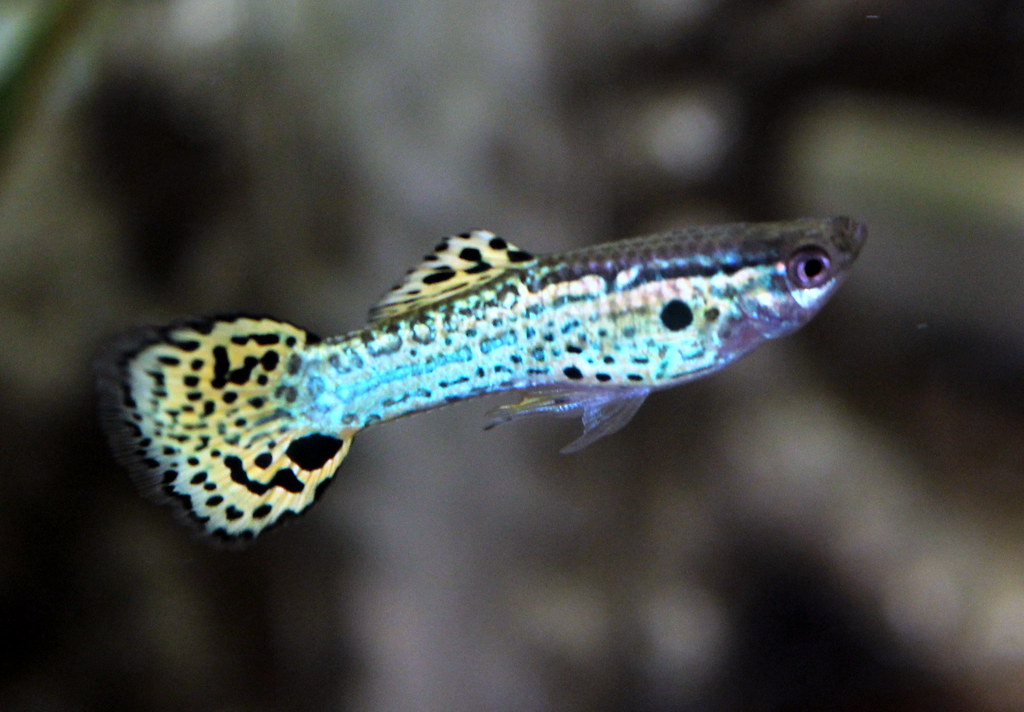
Poecilia reticulata (family Poeciliidae) is a small, colorful livebearing freshwater fish noted for flowing fins and wide availability. This peaceful, shy schooling species is adaptable and low-cost, making it a common recommendation for beginner aquarists; males are smaller and more colorful while females grow about twice as large. Typical adult length ranges from about 0.6–2.4 inches with a lifespan up to two years under good care.
Provide a heated, well‑cycled tank—minimum 5 gallons plus about 1 gallon per additional adult—with temperature held at 74–82°F (23–28°C), pH 6.8–7.6 and hardness around 12–18 dGH. Use gentle filtration and aeration, live plants (Java moss, flame moss, wisteria), caves and sandy or rocky substrate to offer cover and replicate natural habitat. Feed an omnivorous, varied diet (high‑quality flakes, algae wafers, frozen bloodworms); feed twice daily only what is consumed in about two minutes and remove uneaten food. For breeding, maintain up to a 1 male:3 female ratio, a 10‑gallon breeding tank at ~79°F, and expect a 26–31 day gestation; provide floating plants or fine cover for fry and feed crushed flakes, powdered food or brine shrimp. Keep water quality stable with regular changes, monitor for common issues (protozoan infections, ich, fin/tail rot) and treat by correcting water parameters, raising temperature slightly when indicated, and using vet‑recommended treatments.
At a Glance
Guppies are small, colorful livebearing freshwater fish in the Poeciliidae family, prized for flowing fins and wide availability in the aquarium trade. They are peaceful, schooling fish that adapt well to a range of freshwater setups and are commonly recommended for beginner aquarists.
| Species type | Freshwater livebearer (Poeciliidae) |
|---|---|
| Adult size | 0.6–2.4 inches (1.5–6.1 cm) |
| Lifespan | 1–2 years |
| Temperament | Peaceful, shy, active |
| Diet type | Omnivore |
| Tank size | 5 gallons (19 L) |
| Water temperature | 74–82°F (23–28°C) |
| pH range | 6.8–7.6 |
| Care difficulty | Beginner |
| Beginner friendly | Yes, with research |
Quick Overview
Guppies are small, colorful livebearing freshwater fish prized for flowing fins, wide availability, and generally peaceful behavior. They suit hobbyists seeking low‑cost, adaptable community fish and work well for beginners and experienced keepers who can maintain stable, heated water and routine maintenance.
Guppies are known for being easy to keep and for breeding readily in home aquariums. Owners should expect frequent fry when males and females are housed together, provide plants and hiding places for fry and shy individuals, and prioritize consistent water quality to reduce risk of protozoan infections, ich, and fin rot.
Tank & Water Setup
Provide at least a 5‑gallon tank for a small group of guppies and add roughly 1 gallon per additional adult; longer tanks with more surface area are preferable to tall, narrow shapes. Use a fully cycled aquarium before introducing guppies and install gentle filtration to maintain water quality—filters are not strictly essential but are recommended to keep parameters stable; include a bubbler or gentle circulation for aeration.
Stable water parameters greatly reduce stress and the risk of common diseases in guppies. Maintain temperature at 74–82°F (23–28°C) with a reliable heater, aim for pH 6.8–7.6 and water hardness around 12–18 dGH. Lighting is not required unless the aquarium is heavily planted or lacks natural daylight; a regular day/night light cycle helps fish and plants.
Use sand or rock substrate and provide live plants (Java moss, flame moss, wisteria), caves and decorations to offer hiding places and mimic natural cover. Keep water changes and routine testing part of regular maintenance to preserve the cycled environment and prevent stress from parameter swings.
Feeding & Diet
Guppies are omnivores that naturally consume algae, invertebrates and organic particles; in aquaria they accept a mix of plant‑based foods and protein sources. A varied diet that includes flakes, algae wafers and occasional frozen or live foods supports growth and coloration.
Diet variety helps prevent nutritional gaps and avoiding overfeeding preserves water quality and fish health.
- Main food items
- High-quality flake food
- Algae wafers
- Frozen/live bloodworms
- Brine shrimp (frozen or live)
- Crumbled flakes; boiled egg yolk (fry)
- Feeding frequency
- Twice daily
- Only what is eaten within two minutes
- Foods to avoid
- Human food (bread, salty snacks)
- Overfeeding / uneaten food
Tank Mates & Compatibility
Guppies are peaceful, shy, and social surface‑oriented swimmers that do best when kept in small groups rather than alone; the species prefers company and a minimum group size of three. Males are more colorful and active in displaying to females; to reduce female stress during breeding, keep up to one male per three females when possible.
Choose other small, non‑aggressive community species that occupy the middle and bottom levels so they don’t compete with guppies at the surface — examples include cardinal tetras, rummy nose tetras, harlequin rasboras, cory catfish, kuhli loaches, zebra danios, mollies, dwarf chain loaches and sparkling gouramis, and non‑fish tank mates like nerite snails or shrimp. Research compatibility before adding new fish to avoid predation, chronic harassment, or mismatched water‑parameter needs. Avoid large or aggressive species that may bully or eat guppies; also watch for overcrowding and ensure hiding places and plants so shy individuals and fry can shelter.
Health & Lifespan
Guppies have a lifespan of up to 2 years when cared for under appropriate conditions.
Water quality is tightly linked to guppy health: maintain regular water changes, monitor pH, temperature, ammonia, nitrite and nitrate, quarantine new additions, and avoid overfeeding to reduce stress and disease risk.
- Protozoan disease (Tetrahymena sp.)
- Ich (Ichthyophthirius multifiliis)
- Fin rot and Tail rot
Consistent tank maintenance and stable water conditions are the most effective prevention against common diseases.
Pros & Cons (Honest)
- Vibrant colors and flowing fins — strong visual appeal
- Care level: Easy; adaptable and low cost
- Widely available in many varieties
- Suitable for beginners when tank conditions are stable
- Breed readily, helpful for learning livebearing care
- Short lifespan (up to 2 years)
- Can breed prolifically, producing unwanted fry
- Prone to protozoan infections, ich, and fin/tail rot if water quality slips
- Persistent male attention can stress females
- Small size makes them vulnerable to larger or aggressive tankmates
Final Considerations
Guppies suit hobbyists seeking affordable, colorful, social livebearers and fit well in small, planted community tanks when routine maintenance is performed and water parameters are kept steady. Best for keepers who can provide regular maintenance, steady heated water, and space for groups and hiding places.
They are not ideal for tanks with large or aggressive species, for owners who do not want to manage frequent fry, or for those who expect long lifespans from every specimen. Avoid guppies if frequent fry, short lifespans, or predation risk from tankmates would be problematic.