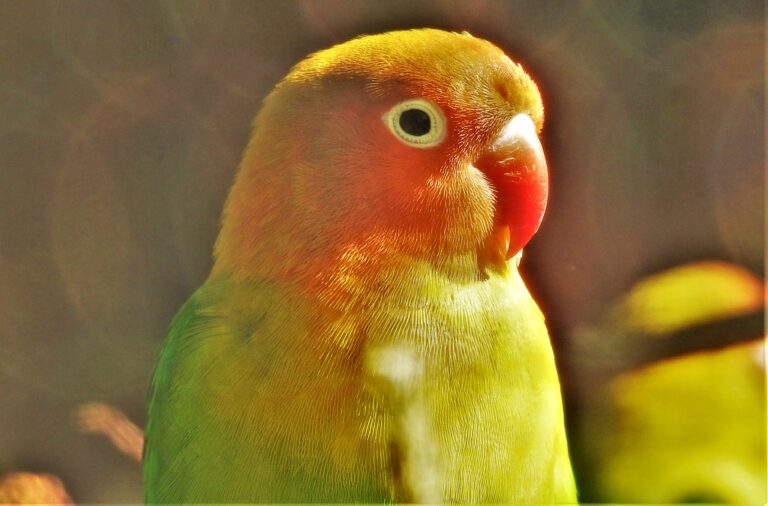

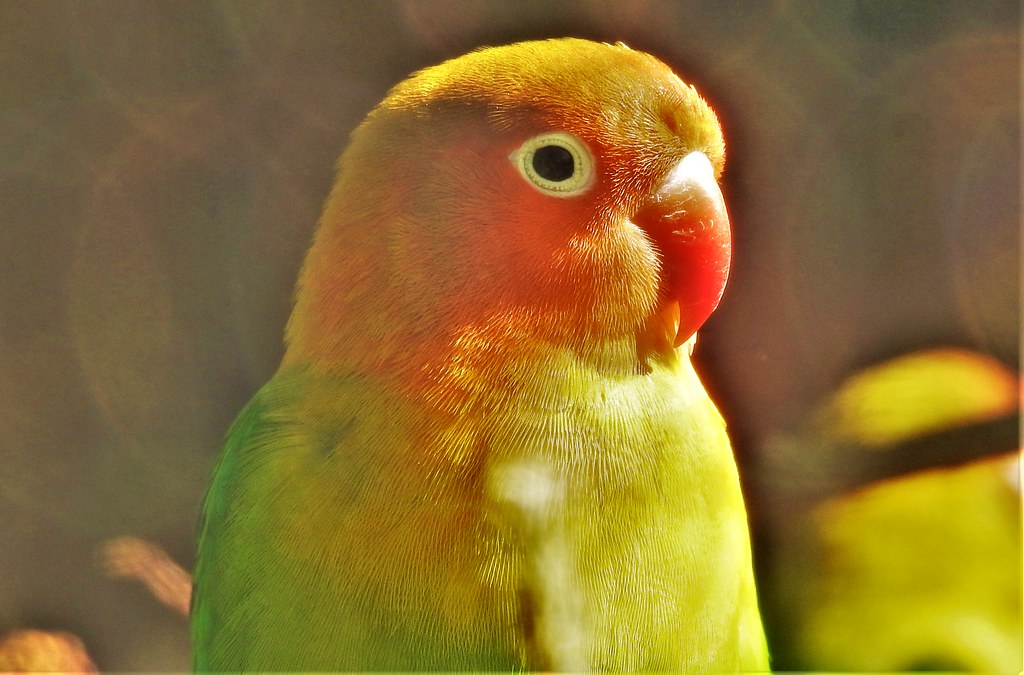
Small parrots in the genus Agapornis, nine species exist — commonly the peach-faced, masked and Fischer’s in the pet trade — notable for strong pair bonds, a stocky build and short, blunt tail feathers. Adults measure roughly 5–6½ inches, have hooked bills and zygodactyl feet, and some species display prominent white eye-rings while others do not.
Care priorities are space, stimulation and balanced nutrition: provide the largest practical cage, daily out-of-cage exercise and sturdy chew-resistant toys to prevent boredom and self-mutilation. Offer a formulated pelleted diet supplemented with vegetables, fruit and safe table foods rather than a seed-only regimen; Lafeber Nutri-Berries or Avi-Cakes can encourage foraging. Expect about 12–15+ years with proper care, and monitor for chlamydiosis, nutritional deficiencies and behavioral issues; single birds need substantial human interaction, while bonded pairs may focus primarily on each other.
At a Glance
Lovebirds are small, stocky parrots in the genus Agapornis commonly kept as companion birds. Pet-available types include peach-faced, masked and Fischer’s, and they form strong pair bonds and are active chewers that require ample space, toys and balanced nutrition.
| Species type | Small parrot (Agapornis) |
|---|---|
| Adult size | 5–6½ in (12.7–16.5 cm) length |
| Colors | Green, peach/rosy, yellow, orange, gray, black |
| Lifespan | 12–15+ years |
| Temperament | Bold, inquisitive, social |
| Vocality | Vocal |
| Diet type | Pellet-based |
| Social needs | Pairs Recommended, single birds need substantial human interaction |
| Care difficulty | Intermediate |
| Beginner friendly | Depends on commitment level |
Quick Overview
Compact, colorful parrots best suited to owners who can provide daily interaction, durable toys and opportunities for out-of-cage exercise. Strong pair bonding is a defining trait that often shapes social needs and housing choices.
Appealing for owners who enjoy an active, curious companion, lovebirds require more engagement and bite-proof enrichment than many small pet birds; they can be vocal and are avid chewers. Key realities include a need for balanced pellet-based nutrition with fresh produce, vigilance for behavioral or nutrition-related health issues, and the possibility that a bonded pair may focus on each other rather than people.
Housing & Environment
Provide the largest cage practical for the home and budget; avoid keeping lovebirds confined in small cages that limit exercise since lack of freedom can lead to neurotic behavior and self-mutilation. Choose bar spacing appropriate to small parrots to prevent escape or foot entrapment, and arrange perches of varied diameters and textures placed to allow movement between feeding and play areas without forcing the bird into droppings zones.
A stimulating, safe environment is essential to prevent boredom and behavioral problems. Use sturdy, chew-resistant toys and regular foraging opportunities; rotate toys and include safe materials such as bird-safe woods, natural fiber ropes and hard plastics designed for parrots. Incorporate foraging feeders or Lafeber Nutri-Berries and Avi-Cakes to encourage natural feeding behaviors and mental engagement.
Place the cage in a stable indoor location away from drafts, kitchen fumes and direct prolonged sun; avoid temperature extremes and sudden changes. Allow daily supervised out-of-cage time for flight, exploration and social interaction in a bird-safe space, and routinely inspect the living area and toys for wear or hazards to maintain safety.
Feeding & Diet
Lovebirds do best on a pellet-based diet supplemented with fresh produce and occasional healthy table foods; a seed-only regimen is associated with malnutrition. Pellets provide a baseline of essential nutrients, while fresh foods and foraging treats add variety and enrichment.
Dietary variety supports long-term health and helps prevent nutritional deficiencies.
- Main food items
- Formulated pelleted diet (avian pellets)
- Lafeber Nutri-Berries or Avi-Cakes for foraging enrichment
- Occasional high-quality seed mix as a treat
- Fresh foods
- Leafy greens and vegetables
- Fresh fruit
- Healthy cooked table foods without sauces or seasoning
- Feeding frequency
- Fresh water daily
- Pellets available daily
- Daily opportunities for fresh produce and foraging
- Foods to strictly avoid
- Avocado
- Chocolate
- Caffeine
- Alcohol
- Moldy or spoiled foods
- Supplementation
- Minimal when feeding a balanced pellet diet; consult an avian vet before adding supplements
- Cuttlebone or mineral block as needed for calcium and beak maintenance
Social Needs & Behavior
Lovebirds are flock birds by nature and commonly form very strong pair bonds; in captivity a bonded pair may focus primarily on each other and interact less with people, while a single bird typically requires extensive human socialization. Females can show territorial behavior around cages, and individual social preferences vary by species and temperament.
Meeting a lovebird’s social needs typically requires daily, dedicated interaction and supervised out-of-cage time. These parrots are chatty—singing and whistling frequently and especially active at dawn and dusk—so expect regular vocalizations; multiple birds increase overall noise. Provide consistent, supervised out-of-cage exercise and varied toys to satisfy curiosity and prevent boredom.
Signs of boredom or stress include repetitive behaviors, pacing, increased screaming, feather picking or self-mutilation and changes in appetite or aggression. Regular enrichment, safe chew toys, foraging opportunities and clear routines reduce the risk of behavioral problems, though individual needs and responses can differ among birds and subspecies.
Health & Lifespan
With proper care and a well-balanced diet, lovebirds commonly live 12–15+ years.
Locate an avian veterinarian before acquiring a bird to establish preventive care; schedule annual checkups, maintain a clean cage environment and minimize exposure to toxic fumes from non-stick cookware, air fresheners and candles. Good husbandry and early veterinary access help detect and address problems such as nutritional issues or infectious disease.
- Chlamydiosis
- Self-mutilation (feather picking)
- Nutritional deficiencies related to seed-only diets
Avian-specialist veterinary care provides species-specific diagnosis, preventive care and treatment that substantially improves health outcomes.
Pros & Cons (Honest)
- Small, compact size fits smaller homes and apartments
- Colorful, active and entertaining personalities
- Long-lived with proper care (commonly 12–15+ years)
- Relatively affordable and commonly available from breeders and pet stores
- Enjoy foraging and interactive toys, rewarding for engaged owners
- Strong pair bonds may lead birds to focus on each other rather than people
- Vocal and chatty, especially at dawn and dusk
- Powerful chewers that need durable, safe toys and supervision
- Risk of boredom-related behaviors such as feather picking or self-mutilation if understimulated
- Seed-only diets cause nutritional deficiencies; require pellet-based diet and fresh foods
Final Considerations
Best suited to owners who can provide daily interaction, supervised out-of-cage time, durable chew-resistant enrichment and a pellet-based diet supplemented with fresh foods. Suitable owners commit time, enrichment and consistent care to meet social and nutritional needs.
Those who need a very quiet, low-maintenance companion or cannot guarantee regular interaction and safe exercise should think twice before acquiring a lovebird. Not ideal for owners seeking a low-maintenance, quiet pet or those unable to provide daily interaction and enrichment.