
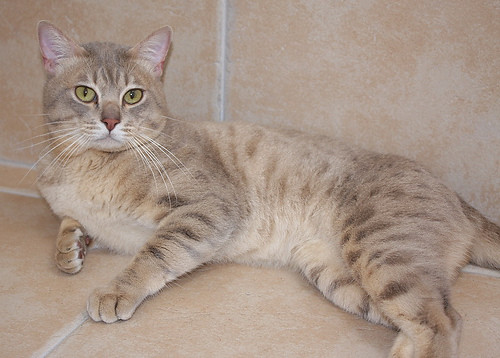
A medium-sized, affectionate short-haired cat with a distinctive spotted or marbled coat, developed in Australia by breeder Truda Straede. The coat’s misted effect—paler ground colour overlaid by patterning and random ticking—creates a soft appearance across accepted colors such as brown, blue, chocolate, lilac, caramel, gold and peach.
Tolerant of handling and unlikely to scratch, these cats are lively as kittens and calmer as adults, making them well suited to indoor life and multi-pet households once spayed or neutered. Typical care is straightforward: weekly brushing, routine nail/ear/dental maintenance, quality dry food and fresh water placed away from food; life expectancy commonly exceeds 15 years. Prospective owners and breeders should maintain routine cardiac screening to monitor for hypertrophic cardiomyopathy.
At a Glance
A medium-sized short-coated companion developed in Australia by crossing Burmese, Abyssinian and domestic short-haired stock to produce a gentle, spotted or marbled appearance. The breed’s signature misted effect comes from ticking over a paler ground colour and is seen across colors such as brown, blue, chocolate, lilac, caramel, gold and peach.
Tolerant of handling and generally affectionate, Australian Mists are lively as kittens and calmer as adults, making them suitable for indoor life and multi-pet homes when spayed or neutered. Care is straightforward: weekly brushing, routine nail ear and dental maintenance, quality dry food, fresh water placed away from food and proactive cardiac screening for hypertrophic cardiomyopathy.
| Origin | Australia |
|---|---|
| Size | Medium-sized cat |
| Weight | 6–12 lb (2.7–5.4 kg) |
| Lifespan | 15–18 years |
| Coat length | Short |
| Colors | Brown, blue, chocolate, lilac, caramel, gold, peach, spotted, marbled |
| Temperament |
|
| Energy level | Medium, kittens lively, adults calmer |
| Vocality | Low, generally quiet |
| Shedding | Low to Medium, moderate shedding |
| Grooming needs | Low, weekly brushing |
| Good with children | Often good with children, depends on socialization and supervision |
Quick Overview
A short-coated, medium-sized breed developed in Australia by Truda Straede through crosses of Burmese, Abyssinian and domestic short-haired cats to produce a spotted appearance. Marbled coats were later accepted and the name changed from “Spotted Mist” to “Australian Mist”.
Affectionate and easygoing, the Australian Mist tends to be tolerant, social and well suited to indoor family life. Kittens are lively while adults are generally calmer; the breed often adapts well to multi-pet households, some can be trained to walk on a lead, and owners should maintain routine grooming and proactive cardiac screening for best long-term care.
Temperament & Personality
Australian Mists are typically gentle, people-oriented cats that combine affectionate behavior with a tolerant disposition toward handling. Affectionate and tolerant, they usually accept being handled and are not inclined to scratch. This temperament makes them well suited to homes where regular interaction and calm handling are common.
These cats often show lively, playful behavior as kittens and settle into a calmer, more even-tempered adult personality; they enjoy play but are not usually demanding. They often balance companionship with independence, responding well to gentle training and environmental enrichment. Some individuals can be taught to walk on a lead and many fit comfortably into indoor family life.
Australian Mists generally adapt well to other pets and children when socialized and spayed or neutered, though personalities vary by individual. Generally confident with strangers yet not overly bold, some cats may be more reserved or sensitive to sudden changes. Consistent, patient interaction and predictable routines help bring out their best behavior.
Family Life: Kids, Cats & Other Pets
Australian Mists are typically tolerant and affectionate, making them well suited to families with children when interactions are gentle and supervised; kittens are lively but often calm down with age. They are generally unlikely to scratch and tolerate handling, so early socialization and consistent, positive experiences with kids help build a secure bond. Attention to predictable routines and providing vertical space or quiet retreats reduces stress during busy family activity.
These cats usually adapt well to other household pets when introduced thoughtfully, and spayed or neutered individuals often fit in easily with resident cats and dogs. Slow, staged introductions, separate resources during the transition, and safe escape routes are important to minimize territorial tension. Individual variation occurs, so monitor interactions and offer supervised time until all animals show relaxed, calm behavior.
Activity, Play & Enrichment
Australian Mists are playful, with lively kitten behavior that usually settles into a calmer, engaged adult play style; they enjoy interactive chase and pounce games and may show a prey-focused interest during toy play. Some individuals can be taught to walk on a lead and many respond well to short, focused play sessions that mimic hunting activity.
Mental and physical stimulation help indoor cats stay engaged, reduce stress, and express natural hunting behaviors.
- Interactive wand toys and feather teasers for chase and pounce play
- Puzzle feeders and food-dispensing toys to encourage foraging
- Climbing structures, cat trees and high perches for vertical exploration
- Window perches or birdwatching stations to provide visual stimulation
- Training games that use toys and treats to reinforce problem solving
Training tips: use reward-based methods such as clicker training for simple behaviors and name recall; introduce leash walking gradually and positively for cats that show interest; keep sessions short and enjoyable so play stays motivating rather than stressful.
Grooming, Shedding & Coat Care
The Australian Mist’s very short coat and lack of an undercoat mean its coat care is straightforward and low-maintenance. Regular quick grooming and routine basic care keep skin and coat healthy while minimizing loose hair around the home.
| Coat type | Short, lacks undercoat |
|---|---|
| Shedding level | Low, loses little hair |
| Grooming frequency | Weekly, quick brushing |
| Bathing | Occasional, as needed |
| Nail trimming | Regular, trim as needed |
| Ear care | Routine checks and cleaning |
| Teeth brushing | Regular, vet-approved pet toothpaste |
| Matting risk | Low |
Health & Lifespan
The Australian Mist commonly reaches mid-to-late teen years; life expectancy is generally reported as 15–18 years.
Responsible care includes regular veterinary checkups and vaccinations, parasite control, spaying or neutering, routine dental care and attention to maintaining a healthy weight through appropriate diet and enrichment. Discuss proactive cardiac screening with your veterinarian or a veterinary cardiologist and keep records of preventive care and any breeder health testing.
- Hypertrophic Cardiomyopathy (HCM)
Choose reputable breeders who screen breeding cats for heart disease or consider adoption from shelters and rescues to support healthy, well-socialized placements.
Feeding & Nutrition
Cats are obligate carnivores, so diets should be protein-focused and appropriate for life stage and activity. Both wet and dry foods can fit into a balanced plan: wet food increases moisture intake while quality dry kibble meets convenient everyday nutrition — the Australian Mist does not have any particular dietary needs beyond good, quality dry food according to breed guidance. Ensuring adequate hydration and a nutrient-dense diet supports long-term health and helps prevent weight-related problems. Fresh, clean water should be provided daily; place the water bowl away from food and consider a filtered drinking fountain if a cat prefers running water.
Offer measured portions rather than free-feeding to help control weight, especially for indoor cats with lower activity levels. Use feeding routines and enrichment such as puzzle feeders to slow intake and encourage foraging behavior. Monitor body condition regularly and adjust portions or food type if a cat gains or loses weight; consult a veterinarian for tailored portioning for life stage, neuter status, or health conditions.
Breed-specific notes are minimal: there are no special nutritional requirements listed for Australian Mists beyond general good-quality food and access to fresh water. Maintain routine veterinary care and discuss any dietary changes or supplements with a veterinarian to ensure balanced nutrition over the cat’s lifetime.
Pros & Cons (Honest)
- Affectionate and tolerant with people, often good for families
- Short, low-maintenance coat with minimal shedding
- Calmer adults, adaptable to indoor life and multi-pet homes
- Moderate size suits many living spaces
- Long typical lifespan when well cared for
- Require proactive cardiac screening because HCM can occur
- Individual temperament varies; some may be more reserved or sensitive
- Indoor living needs enrichment to prevent boredom and weight gain
- Owners must maintain routine grooming and dental care
- Careful introductions may be needed to manage territorial dynamics with other pets
Final Considerations
Australian Mist often fits households looking for an affectionate, tolerant companion that adapts well to indoor life and multi-pet homes. Ideal owners value a calm, people-oriented cat with low grooming needs and enjoy providing play and environmental enrichment.
Those who need an extremely independent or very high-energy cat, or who cannot commit to routine care and enrichment, may want to evaluate other breeds or meet individual cats before deciding. Prospective owners should choose cats whose temperament and activity level align with their lifestyle and living environment.